


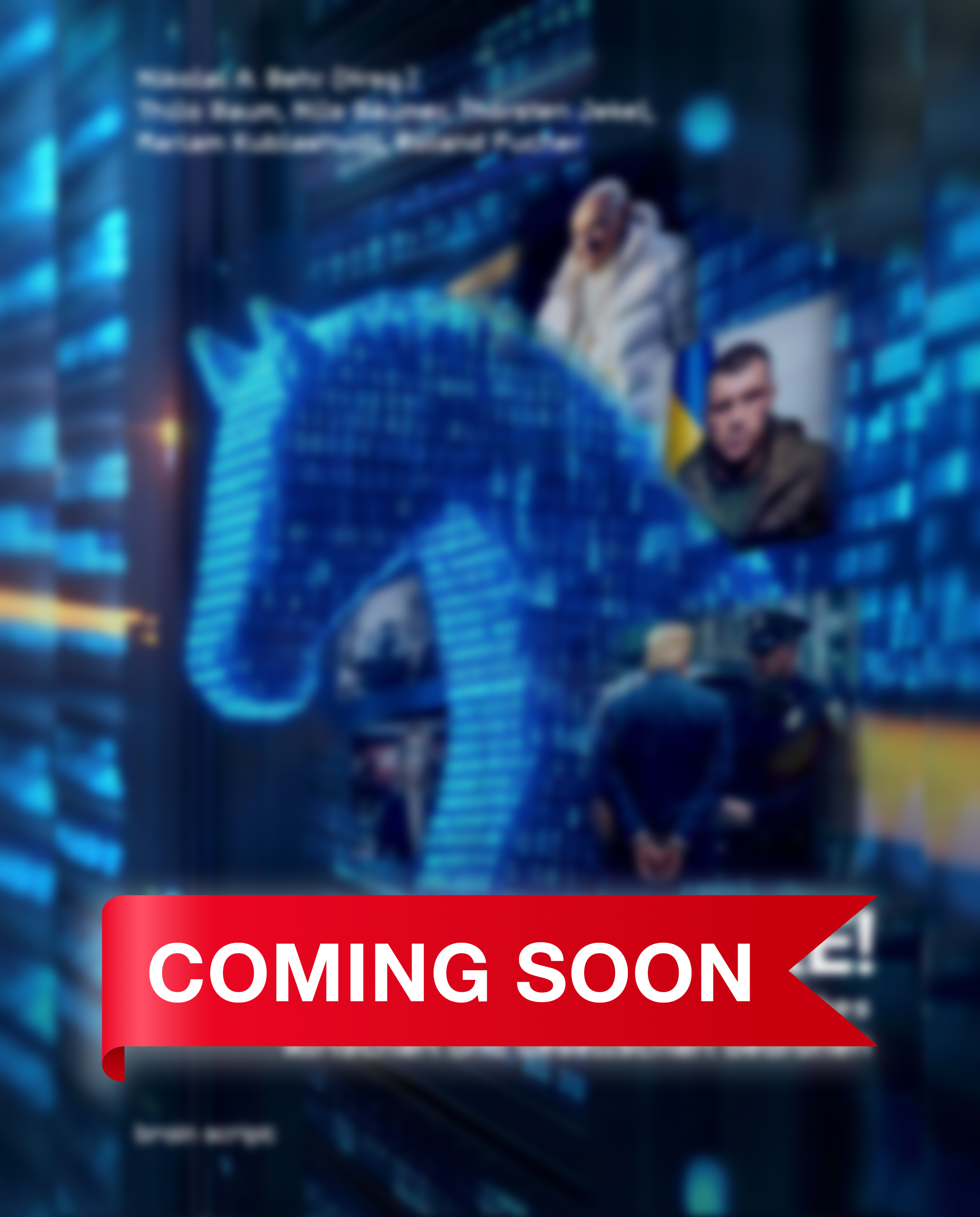
Deception at the touch of a button. Truth under attack.
With the rise of generative AI, deceptively real deepfakes, and massively disseminated fake news, the boundaries between fiction and reality are becoming blurred. What we see, hear, and believe can be deliberately manipulated—with massive consequences for democracy, the economy, and our social coexistence.
 WE ARE FAKE! is the first interdisciplinary anthology in the German-speaking world to comprehensively analyze these challenges—and show how we can address them.
Experienced journalists, scientists, communication experts, and practitioners shed light on the status quo and provide concrete recommendations for action.
 Key topics
- What are deepfakes – and how do they work technically?
What role does AI play in the targeted dissemination of disinformation?
How great is the danger for companies, elections, reputation, and public opinion?
What ethical, legal, and communicative responses do we need?
 Who is this book for?
Target groups:
- Executives and decision-makers in business, politics, and administration
Communications, HR, and compliance managers
Journalists, media, and IT professionals
Students and researchers in the fields of media, politics, AI, and society
Anyone who is committed to democracy, ethics, and digital responsibility
Book details:
- Title: WE ARE FAKE! How AI abuse, fake news, and deepfakes threaten the economy and society
- Editor: Dr. Nikolai A. Behr
- With contributions from: Thilo Baum, Nils Bäumer, Nikolai A. Behr, Thorsten Jekel, Mariam Kublashvili, Roland Pucher, and others
- Publisher: brain script
- ISBN: 978-3-9808678-7-0
- Format: Softcover
- Numer of pages: 256
- Price: Germany: 26,90 EUR, Austria: 27,65 EUR (shipping included for direct orders from the publisher)
 Why you should read this book
- Understand how digital disinformation is changing our society
- Recognize risks to leadership, communication, and public institutions
- Learn strategies for prevention, monitoring, and digital resilience
- Set the stage for an ethically grounded, democratic future
 Call-to-Action
 Order now and gain digital clarity
- Request a sample or press kit
- For keynotes, workshops, or interviews: Contact us


The authors:
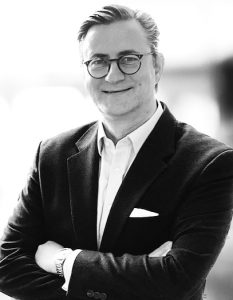
Nikolai A. Behr:
Dr. Nikolai A. Behr is a communications scientist, media expert, and founder of the German Institute for Communication and Media Training (DIKT). With over 25 years of experience in journalism, executive coaching, and media ethics, he is deeply involved in researching the effects of digital disinformation on the economy and society. In his latest anthology, “WIR SIND FAKE!” (WE ARE FAKE!), he brings together expert opinions on fake news, deepfakes, and AI abuse—and shows ways in which we as a society, companies, and individuals can arm ourselves against the new wave of digital deception.
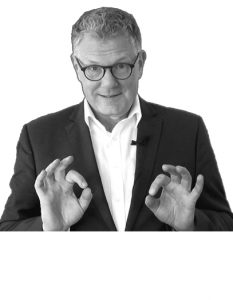
Thilo Baum:
Thilo Baum, communications scientist and author, is known for his clear language and ability to explain complex topics in an understandable way. Since the coronavirus crisis, he has been studying the susceptibility of educated people to conspiracy myths and, in his book “Immun gegen Unsinn” (Immune to Nonsense), he argues for making society as a whole more resistant to disinformation. To this end, he founded the “Netzwerk Informationskompetenz” (Information Literacy Network) and offers practical training and materials for schools, companies, and organizations.
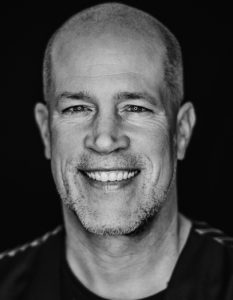
Nils Bäumer:
Nils Bäumer is the managing director of the transformation consultancy DenkSinn GmbH and has been an expert in creativity and innovation for over 25 years, communicating the opportunities and challenges of generative AI in lectures and books. After studying sports economics, he founded the event agency Synapsensprung® and has been active internationally as a speaker since 2013, most recently with the book “Beyond the Algorithm – Creativity in the Age of AI.” With DenkSinn, which received the HR Excellence Award in 2024, he and his wife support companies in creative transformation and are considered “idea midwives” and “guaranteed catalysts.”
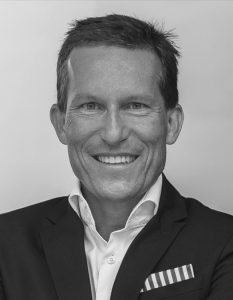
Thorsten Jekel:
Thorsten Jekel is an IT expert and management consultant who has been developing digital technologies since the 1980s, focusing on their benefits for businesses. After working his way up from sales assistant to managing director and completing an Executive MBA at Tchibo, he has been supporting executives as a personnel IT coach since 2010. As a keynote speaker and sparring partner, he provides practical guidance on how iPads, Microsoft 365, and AI can be used strategically to make digitalization understandable, useful, and relevant to business.
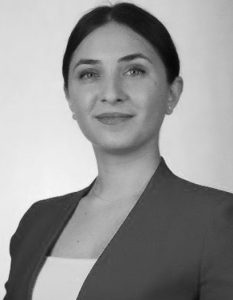
Mariam Kublashvili:
Mariam Kublashvili is a security policy expert focusing on NATO, transatlantic relations, and hybrid warfare, and is committed to promoting a broader understanding of security policy issues. After studying in Tbilisi and Heidelberg, she worked at the German Bundestag and the Friedrich Naumann Foundation, among others, and led projects at the German Atlantic Society and Diskutier Mit Mir. A sought-after speaker, she regularly appears at international security policy conferences and is considered an important voice of the young generation of security policy experts.
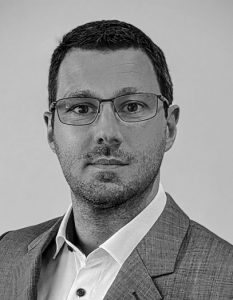
Roland Pucher:
Roland Pucher is a cybersecurity and privacy expert at PwC Austria, where he heads the Cybersecurity & Innovation Lab and supports companies in defending against cybercrime. He studied Secure Information Systems in Hagenberg and teaches practical courses at several universities on topics such as IT forensics, malware analysis, and incident response. He also conducts research into the detection of deepfakes, develops prevention strategies, and is a sought-after international speaker on cybersecurity topics.