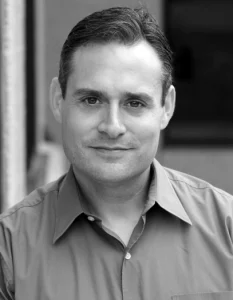
Author Jim Harris

Jim Harris

Jim Harris is an international speaker and author working at the intersection of technology, learning, and cybersecurity. His work explores how AI can be misused for deception but also applied to strengthen resilience through education and awareness. In this book, he examines deepfakes and cybercrime from a learning and organizational perspective.

Author Bryce Austin

Bryce Austin

Bryce Austin is a technology and cybersecurity expert with more than two decades of experience in leadership roles. He has served as Chief Information Security Officer for organizations of various sizes and advises boards on cybersecurity, governance, and risk management. His work focuses on the practical, legal, and regulatory risks of artificial intelligence.

Dr. Nikolai A. Behr

Dr. Nikolai A. Behr (ed.)

Dr. Nikolai A. Behr is a communications consultant, media trainer, keynote speaker, and author. As editor of this volume, he focuses on the strategic role of communication, media literacy, and leadership in an age of digital manipulation. His work examines how organizations, decision-makers, and societies can better understand and respond to disinformation, narrative distortion, and AI-driven deception.

Autor Thilo Baum

Thilo Baum

Thilo Baum is a communications scientist, editor, and author known for making complex issues accessible through clear language. Since the coronavirus crisis, his work has focused on why even well-educated individuals are susceptible to rumors and conspiracy myths. He emphasizes the importance of information literacy beyond purely technical or legal solutions.

Autor Nils Bäumer

Nils Bäumer

Nils Bäumer is managing partner of the transformation consultancy DenkSinn GmbH and has worked in creativity and innovation for more than 25 years. With a background in sports economics, he combines perspectives from creativity research, business transformation, and generative AI. As a speaker and author, he explores how organizations can maintain human-centered thinking in the age of AI.

Autor

Thorsten Jekel

Thorsten Jekel combines expertise in information technology and management. His career spans software development, executive leadership, and management consulting. Since 2010, he has focused on helping executives use digital tools productively and strategically, with an emphasis on Microsoft 365, mobile technologies, and artificial intelligence.

Autorin

Mariam Kublashvili

Mariam Kublashvili is a security policy expert specializing in European security architecture, NATO, transatlantic relations, and hybrid threats. She studied political science and linguistics in Tbilisi and holds a master’s degree in international relations from Heidelberg University. Her professional background includes work for the German Bundestag, political foundations, and international security policy initiatives.

Autor

Roland Pucher

Roland Pucher, M.Sc., is a cybersecurity and privacy expert at PwC Austria, where he heads the Cybersecurity & Innovation Lab. With extensive experience in IT forensics, incident response, and awareness programs, he supports organizations in reducing cyber risks and preventing damage caused by cybercrime.

FAQ about the Editor: Dr. Nikolai A. Behr

Why did Dr. Nikolai A. Behr initiate this book project?

The idea emerged from his crisis communication training work. In working with executives and organizations, he repeatedly encountered companies that had already become victims of cyberattacks, CEO fraud, and email-based deception. The book was conceived partly as a warning — and as guidance — for clients facing these risks.

How did the collaboration with the contributing authors begin?

At the German Speakers Association Convention in September 2024, Dr. Behr discussed the topic with Roland Pucher, who had delivered a keynote on cybersecurity and deepfakes. He also spoke with Thorsten Jekel and Nils Bäumer, both long engaged with AI and cybersecurity issues. Later, he discussed the concept with Thilo Baum, author of Immun gegen Unsinn, who actively works against online disinformation. These conversations shaped the foundation of the book.

How were the international contributors selected for the English edition?

For the English edition, Dr. Behr expanded the project internationally at the National Speakers Association Convention. There he invited Canadian expert Jim Harris and U.S. cybersecurity advisor Bryce Austin to contribute additional perspectives.

What qualifies Dr. Behr to edit this volume?

Dr. Behr is a communications consultant, media trainer, keynote speaker, and author specializing in leadership communication, crisis communication, and media literacy. His professional experience includes preparing executives and board members for high-stakes communication environments.

What other books has Dr. Behr published?

His publications include Management Task No. 1: Communication, Munich 50 years in pictures, Unternehmensstärke (company strength), and We Are Fake! (German edition), among others.

How does this book connect to Dr. Behr’s work in leadership and crisis communication?

The book reflects his practical experience in crisis communication training, where disinformation, cyber deception, and trust erosion increasingly affect executive decision-making.

FAQ about the Contributors

What does Jim Harris contribute to the book?

Jim Harris focuses on the intersection of deepfake technology and cybercrime, examining AI-driven fraud, voice cloning, and synthetic media attacks that already cause measurable financial damage. He also demonstrates how responsibly designed AI systems can support detection, prevention, and organizational resilience.

What is Bryce Austin’s perspective?

Bryce Austin analyzes the widening gap between rapid AI development and the ability of legal systems to regulate it, highlighting challenges around opacity, hallucinations, and accountability. He argues that new regulatory thinking is required.

What is Thilo Baum’s contribution?

Thilo Baum expands traditional media literacy to include attention literacy, emphasizing emotional vulnerability and psychological manipulation in digital environments.

What does Mariam Kublashvili examine?

Mariam Kublashvili analyzes propaganda and disinformation within hybrid warfare and modern geopolitical conflict, connecting AI-driven manipulation to international security and global stability.

What role does Roland Pucher address?

Roland Pucher describes technical and social risks of deepfake technologies and cybersecurity threats, outlining real-world vulnerabilities and the importance of proactive risk mitigation.

What practical perspective does Thorsten Jekel offer?

Thorsten Jekel presents tools and approaches to detect and expose digital deception in everyday professional environments, focusing on practical verification techniques.

How does Nils Bäumer approach AI?

Nils Bäumer advocates for a creative, ethical, and empathetic approach to artificial intelligence, emphasizing human-centered and values-driven innovation.